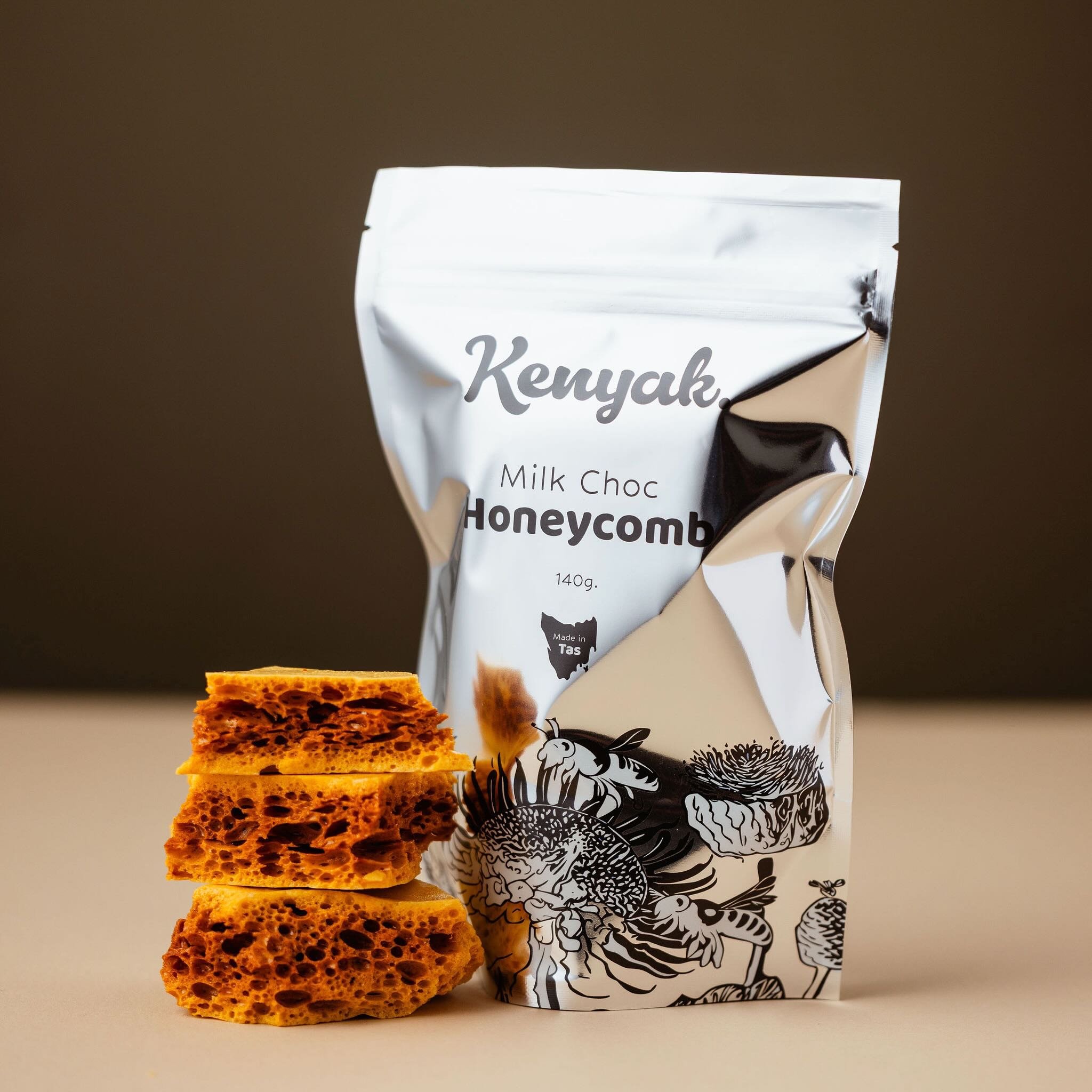
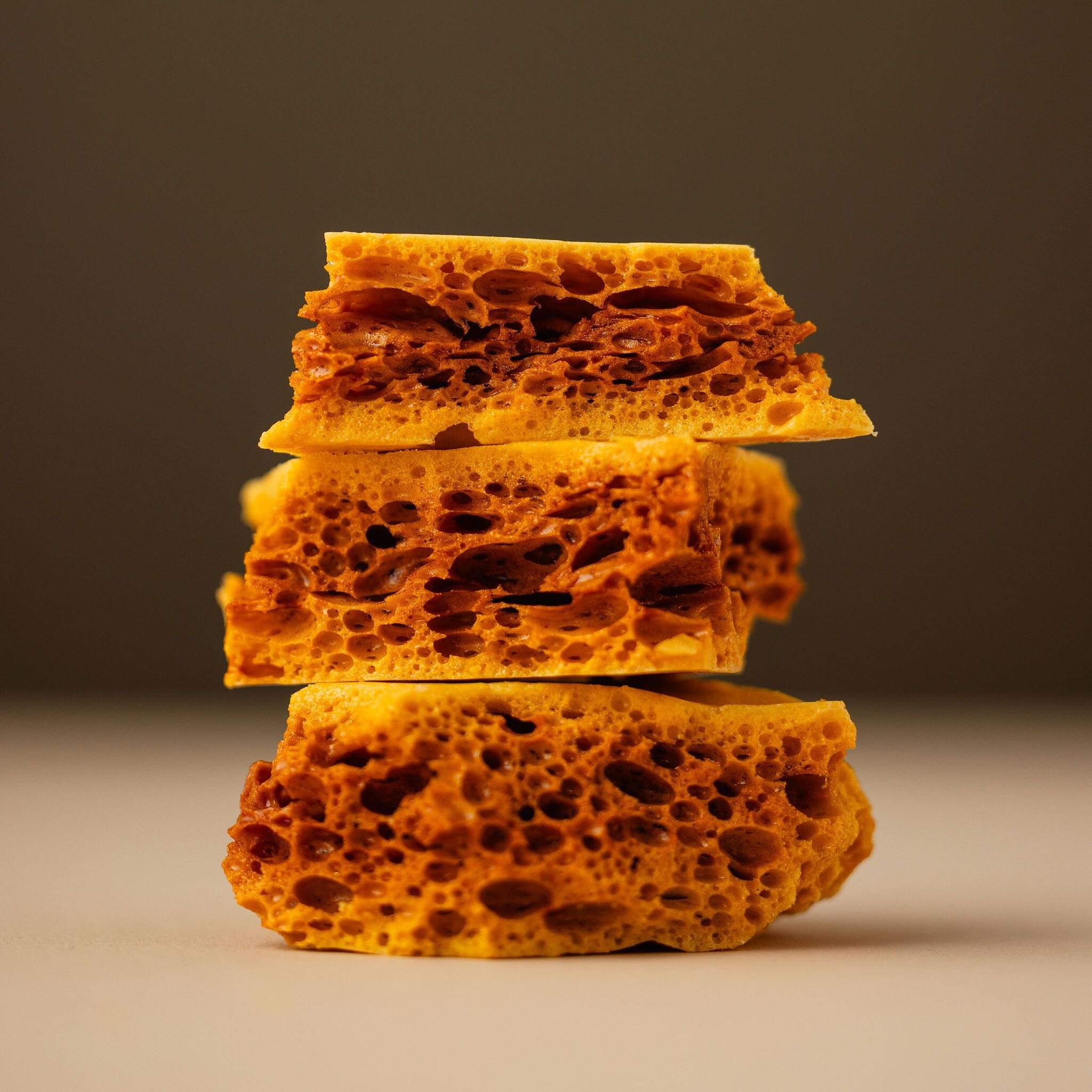
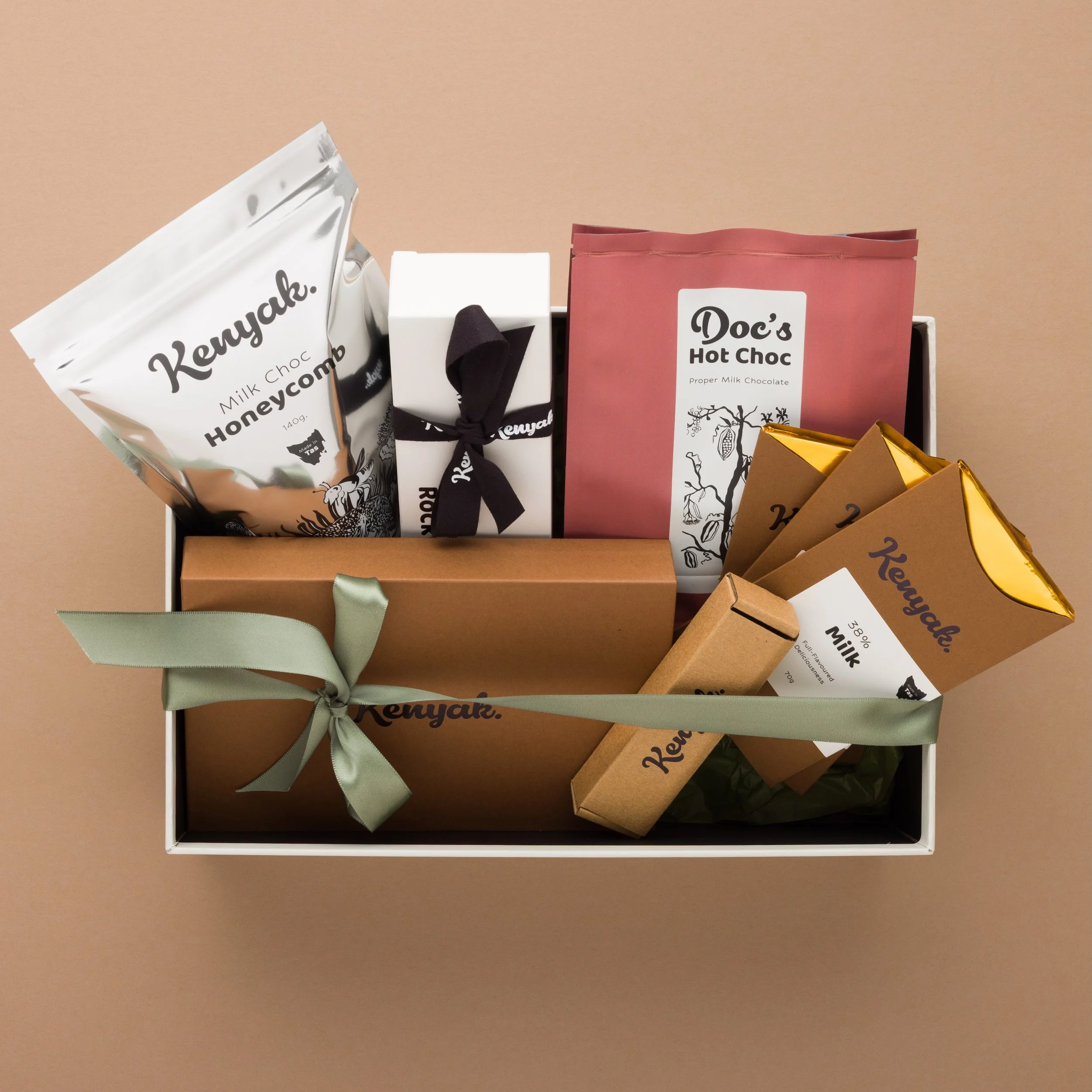
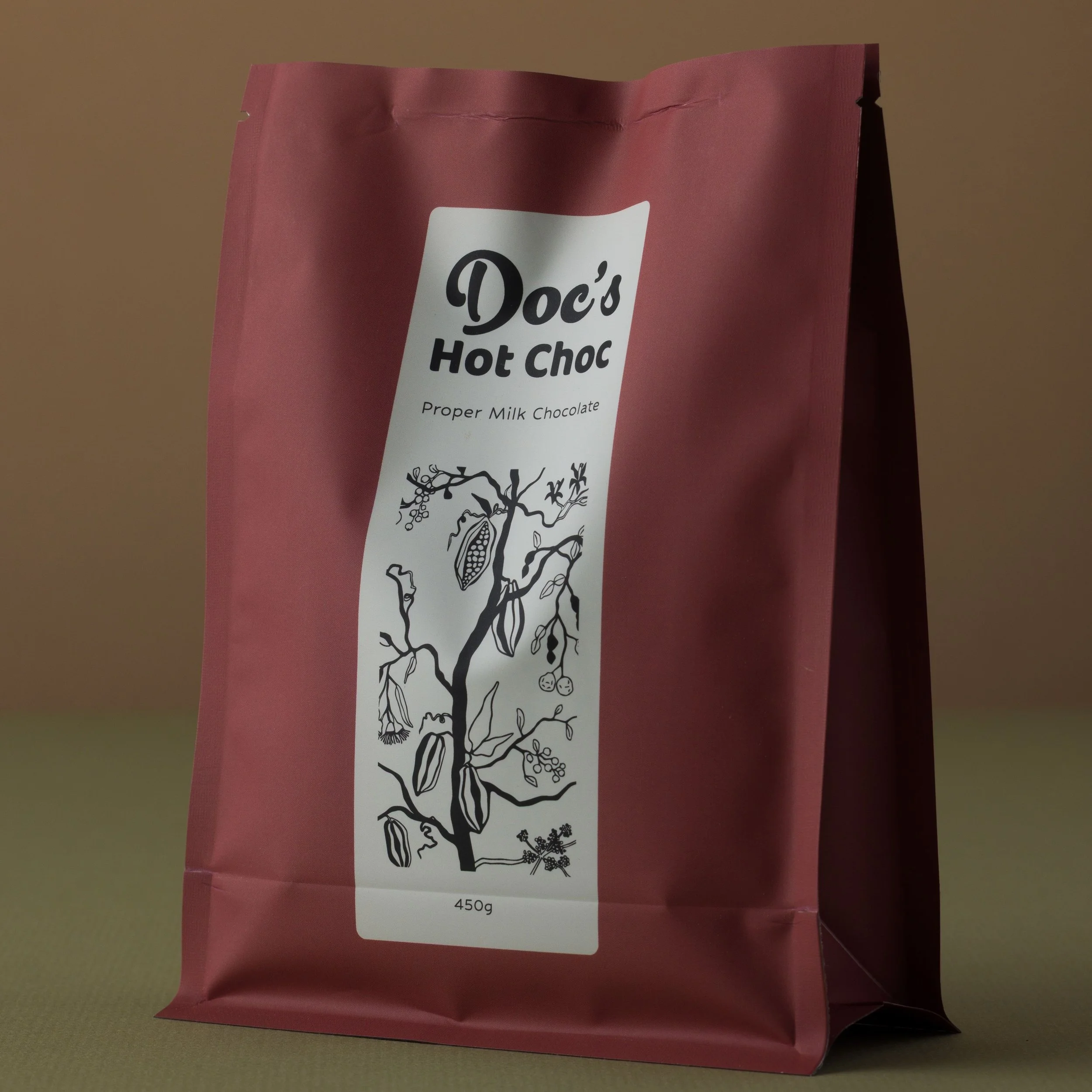
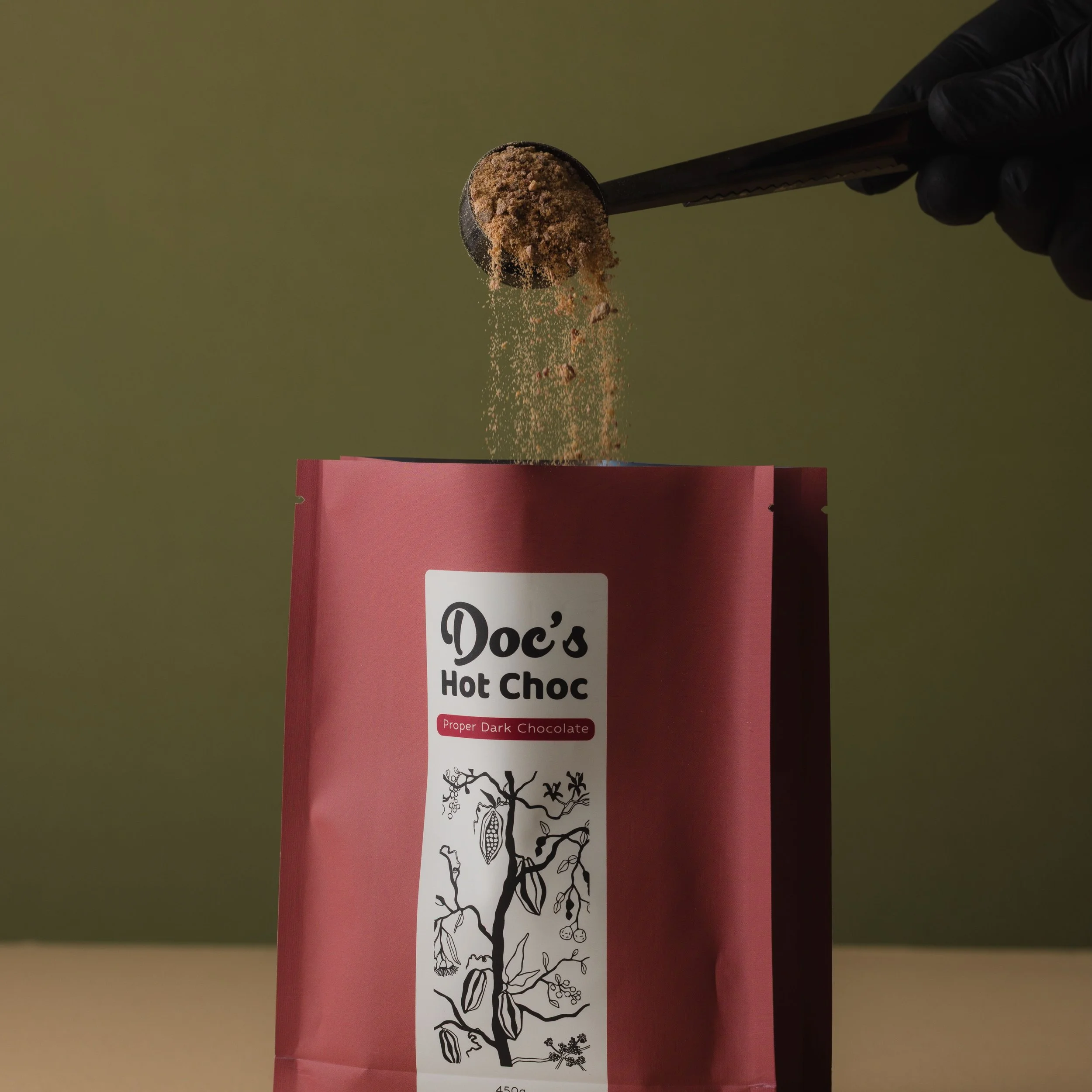
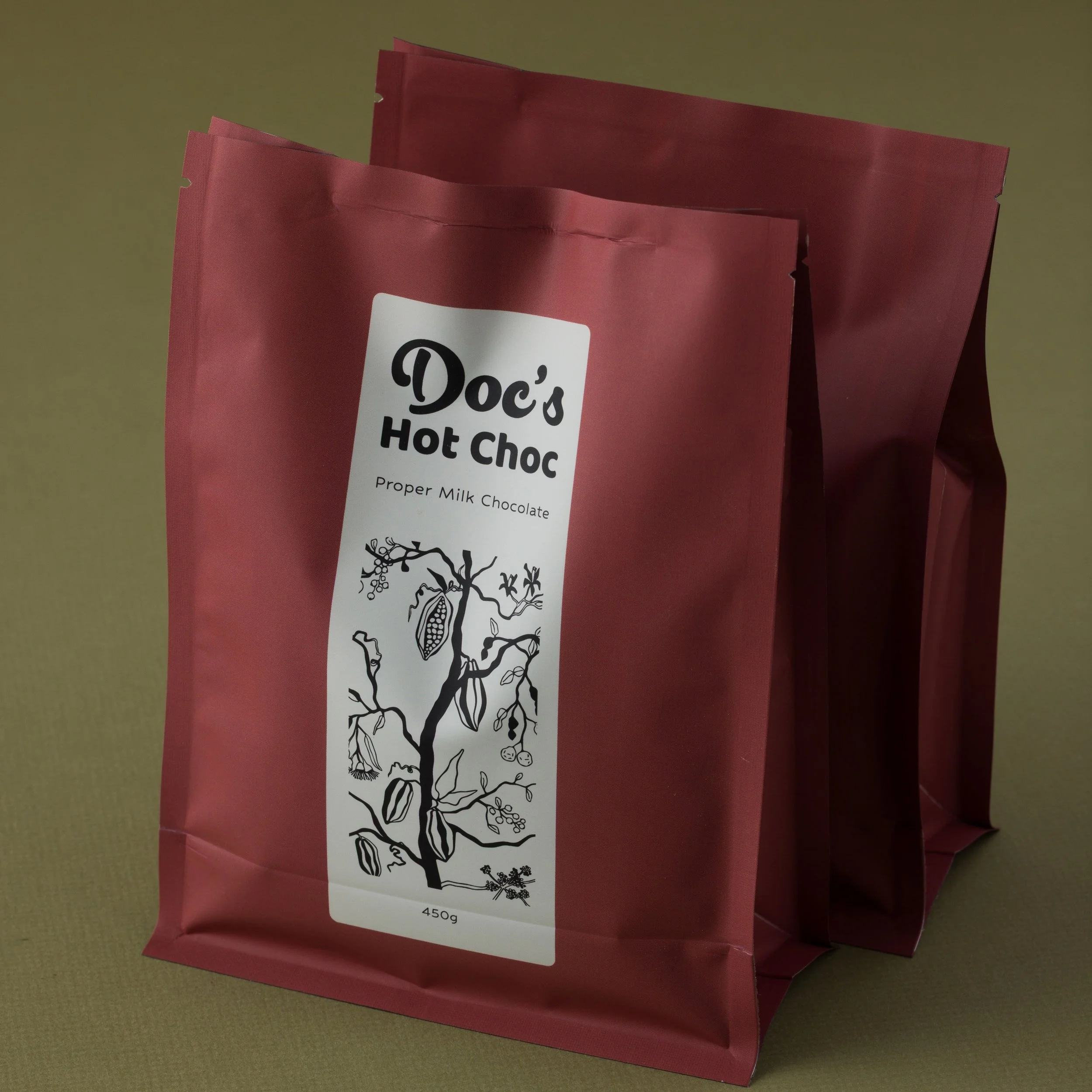
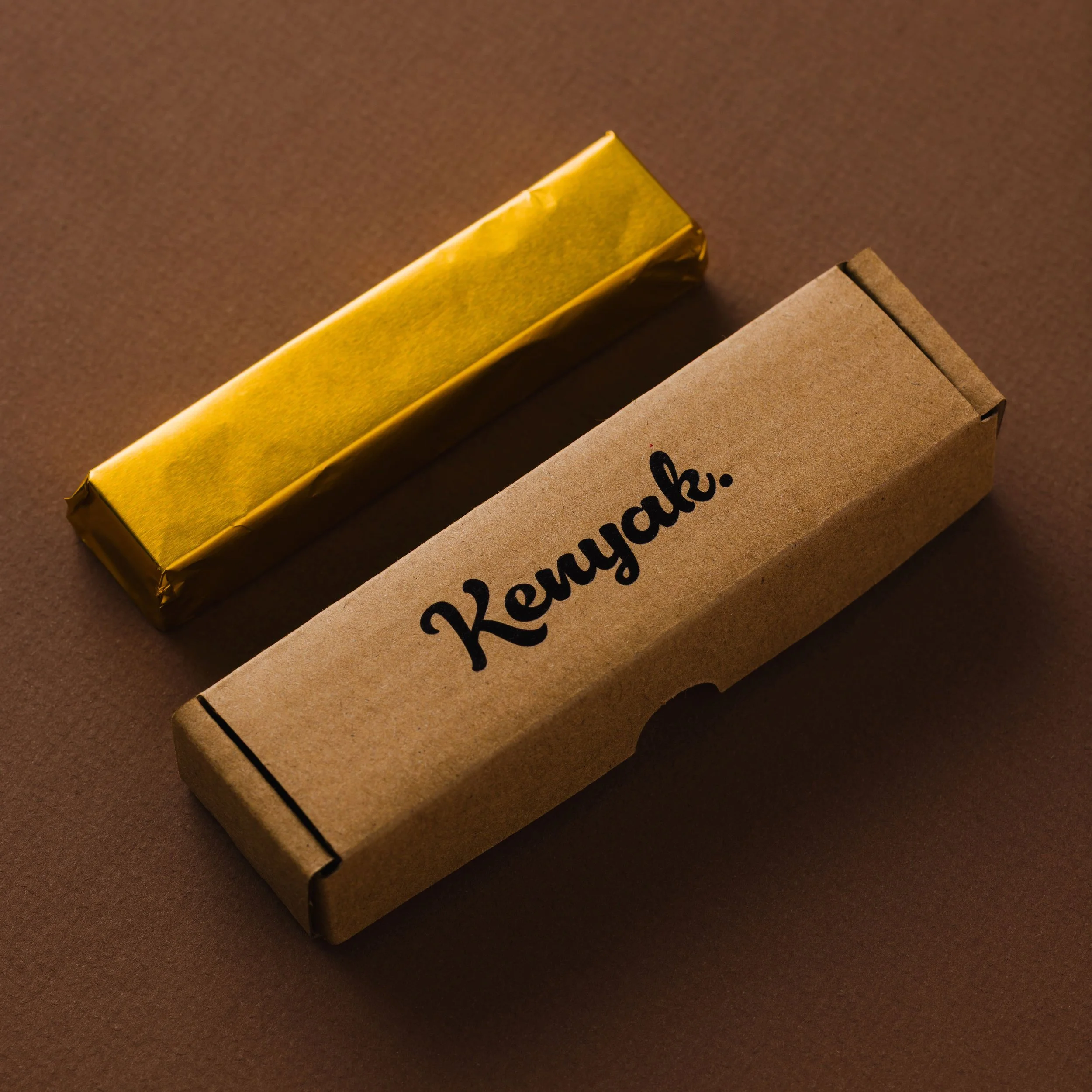
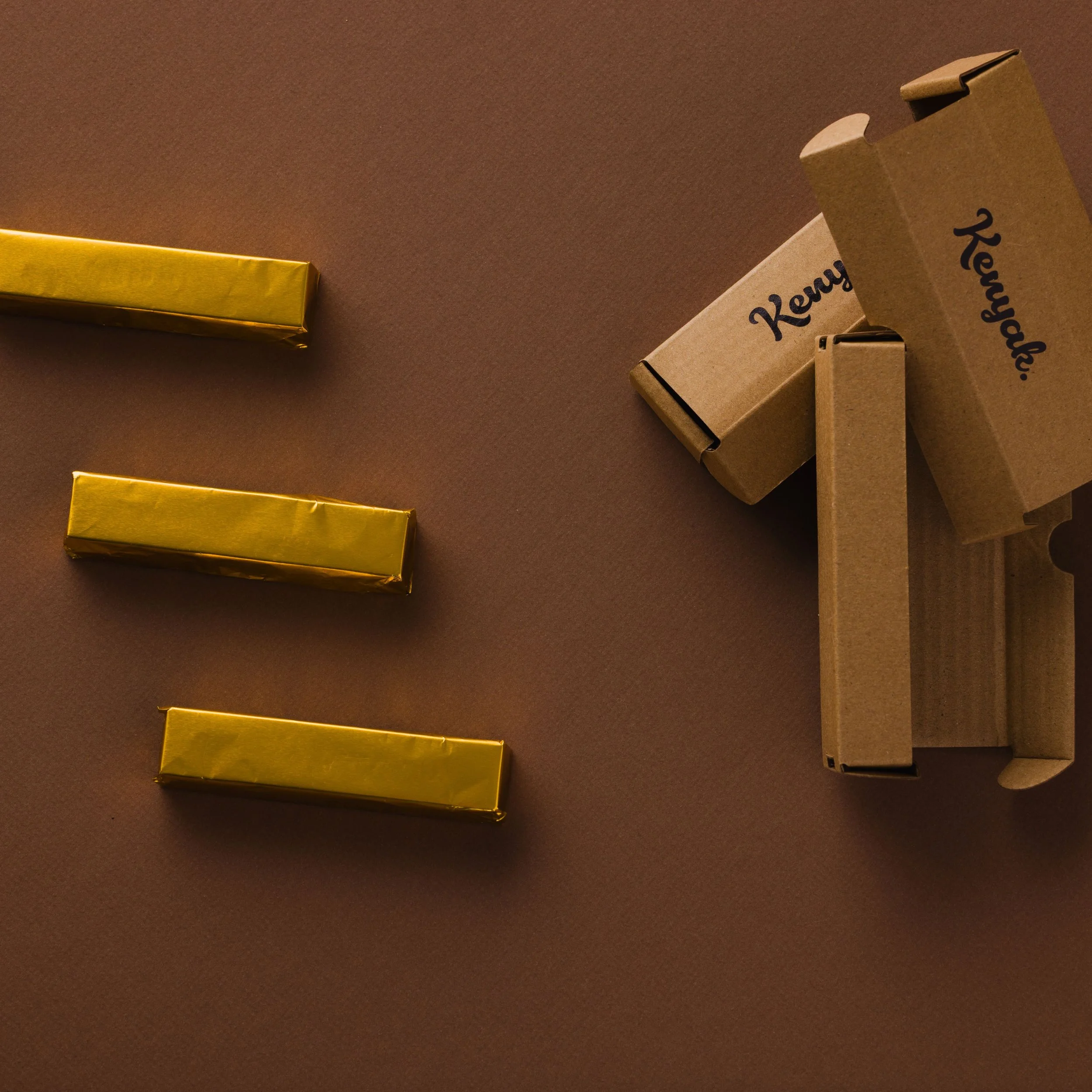
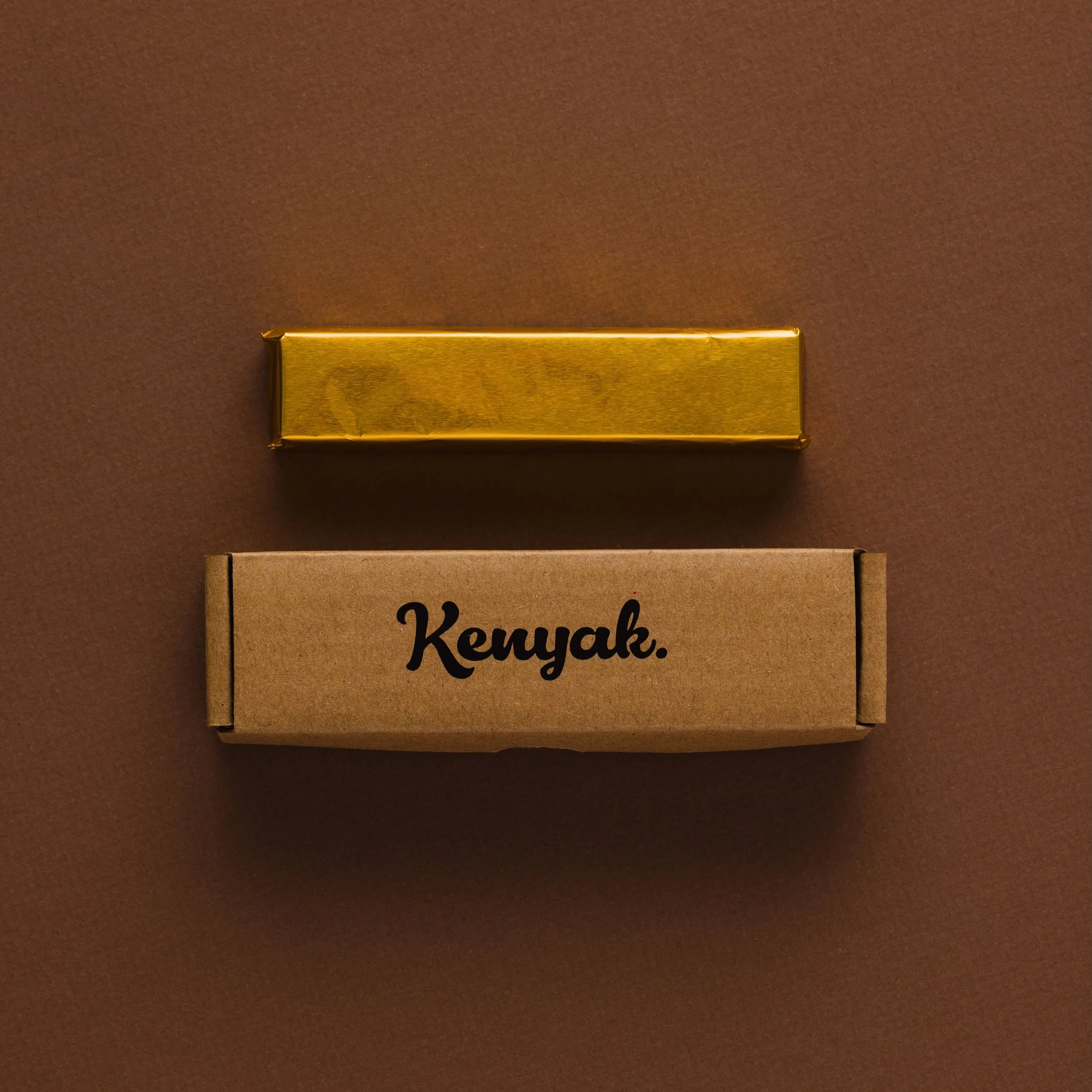
This is an outrageously Hedonistic, Limited-Edition release of our famous Honeycomb.
Featuring Native Australian Stingless Bee Honey; one hive produces just 1kg of honey per year, which is between 30 to 100 times less than a commercial bee hive.
The Dark Chocolate is a 74% Grand Cru from the Elevisa Estate in the NE of the Dominican Republic. It has a rich liquorice and coffee profile, rounded out by a long broody prune and tobacco finish. This is a direct result of extended gentle processing and a 72 hour conche technique.
We’ve made just 200 bags of this tasty treat to celebrate Dark Mofo. It is a one time release and will not be restocked.
Tasting Notes
Lustfully fruitful. Like jumping into an ice batch on a hot summers day with a can of sparkling pineapple kombucha in one hand and a lemon sour strap in the other. A big broad swash of honey kicking into a strong second gear with sour tiki fruits and a deep broody liquorice-coffee chocolate finish. Pronounced two step pallete weight. Mysterious. Delicious.
Best Enjoyed
Alone at 8am as you’re cresting the second last rise towards Hartz Peak whilst looking off into the rapidly rolling cloudfront ahead wondering if you’ll ever see the peak, or if it’s just another one of those Tasmanisms that surely couldn’t exist in real life but are talked up so much that they might just be. Where it’s light and bright yet somehow dark and so quiet with the wind whistling past your ear with the rocks and the moss that have been here before you for millennia.
With your girlfriends and a bottle of rosé while you google exaclty what a tasmanism is and what it is exactly that you should wear to Night Mass given that it’s going to be three degrees.
Some exceptionally long winded thoughts…
I’ve wanted to go wild for some time now.
There’s a Japanese principle of misogi. A lot of endurance athletes have transcribed (myself included at one time) to represent the idea of doing something really very difficult once a year so that your mind and body and soul are so challenged by it that everything else seems easy in comparison. I’m almost certain that’s not quite the most pure translation. But if a group of people can take an idea and make it their own, then so too can I.
My idea; and perhaps one shared by a larger proportion of Hobartians, is that Dark Mofo is a very sacred time of year for us little island dwellers. One where regardless of what is going on you must simply make time to succumb to some hedonism.
A chance to let loose. To explore: to enjoy, mostly to attend night mass and party until the sun comes up, which in winter might well be 8am. To run wild.
And so as dark mofo sets it’s big red crosses upside down along the Hobart Waterfront, dividing the horizon between the now and the next, I’m letting loose, and going a little wild.
This limited release of honeycomb is truly something. It reminds me very specifically of one night in Adelaide, as a 19 year old pastry apprentice, when Jock Zonfrillo was standing beside me after dinner service asking me to reduce native honey down to a thick syrup to make marshmallows with.
It was outrageous.
Native stingless bees produce almost one hundred times less honey per hive than some commercial hives in Australia. And here we were reducing it down another ten times at eleven pm to make some marshmallows.
Now, you could argue that it is wasteful; to use such excessive amounts of a resource so finite to make something like that. To take the years work of around five to ten thousand bees and compound it into just thirty pieces of something. And at the time, I thought so too. Perhaps I still do.
But, years later - revisiting this idea for myself; I’m seeing it somewhat as a hedonistically-hybolic argument. And I’m cracking out some big words in a moment of self-indulgence to do so.
Why can you still buy honey at the shops that’s watered down?
In-fact why ,when the Australian bee industry is working so damn hard to manage and recover from the Varoma Mite outbreak can you still buy imported honey at the shops that’s cheaper than what we produce here?
Why aren’t we doing everything we can to support this industry that literally ensures our survival?
All questions I suppose nobody really wants to hear about.
So alas, inspired by some memory, and by some local Tasmanians, I’ve decided to run my own little take of ‘eating the problem’ out into the world. Just, I’ve flipped it on it’s head.
Things to know
This is an outrageously Hedonistic, Limited-Edition release of our famous Honeycomb.
Featuring Native Australian Stingless Bee Honey; one hive produces just 1kg of honey per year, which is between 30 to 100 times less than a commercial bee hive.
The Dark Chocolate is a 74% Grand Cru from the Elevisa Estate in the NE of the Dominican Republic. It has a rich liquorice and coffee profile, rounded out by a long broody prune and tobacco finish. This is a direct result of extended gentle processing and a 72 hour conche technique.
We’ve made just 200 bags of this tasty treat to celebrate Dark Mofo. It is a one time release and will not be restocked.
Tasting Notes
Lustfully fruitful. Like jumping into an ice batch on a hot summers day with a can of sparkling pineapple kombucha in one hand and a lemon sour strap in the other. A big broad swash of honey kicking into a strong second gear with sour tiki fruits and a deep broody liquorice-coffee chocolate finish. Pronounced two step pallete weight. Mysterious. Delicious.
Best Enjoyed
Alone at 8am as you’re cresting the second last rise towards Hartz Peak whilst looking off into the rapidly rolling cloudfront ahead wondering if you’ll ever see the peak, or if it’s just another one of those Tasmanisms that surely couldn’t exist in real life but are talked up so much that they might just be. Where it’s light and bright yet somehow dark and so quiet with the wind whistling past your ear with the rocks and the moss that have been here before you for millennia.
With your girlfriends and a bottle of rosé while you google exaclty what a tasmanism is and what it is exactly that you should wear to Night Mass given that it’s going to be three degrees.
Some exceptionally long winded thoughts…
I’ve wanted to go wild for some time now.
There’s a Japanese principle of misogi. A lot of endurance athletes have transcribed (myself included at one time) to represent the idea of doing something really very difficult once a year so that your mind and body and soul are so challenged by it that everything else seems easy in comparison. I’m almost certain that’s not quite the most pure translation. But if a group of people can take an idea and make it their own, then so too can I.
My idea; and perhaps one shared by a larger proportion of Hobartians, is that Dark Mofo is a very sacred time of year for us little island dwellers. One where regardless of what is going on you must simply make time to succumb to some hedonism.
A chance to let loose. To explore: to enjoy, mostly to attend night mass and party until the sun comes up, which in winter might well be 8am. To run wild.
And so as dark mofo sets it’s big red crosses upside down along the Hobart Waterfront, dividing the horizon between the now and the next, I’m letting loose, and going a little wild.
This limited release of honeycomb is truly something. It reminds me very specifically of one night in Adelaide, as a 19 year old pastry apprentice, when Jock Zonfrillo was standing beside me after dinner service asking me to reduce native honey down to a thick syrup to make marshmallows with.
It was outrageous.
Native stingless bees produce almost one hundred times less honey per hive than some commercial hives in Australia. And here we were reducing it down another ten times at eleven pm to make some marshmallows.
Now, you could argue that it is wasteful; to use such excessive amounts of a resource so finite to make something like that. To take the years work of around five to ten thousand bees and compound it into just thirty pieces of something. And at the time, I thought so too. Perhaps I still do.
But, years later - revisiting this idea for myself; I’m seeing it somewhat as a hedonistically-hybolic argument. And I’m cracking out some big words in a moment of self-indulgence to do so.
Why can you still buy honey at the shops that’s watered down?
In-fact why ,when the Australian bee industry is working so damn hard to manage and recover from the Varoma Mite outbreak can you still buy imported honey at the shops that’s cheaper than what we produce here?
Why aren’t we doing everything we can to support this industry that literally ensures our survival?
All questions I suppose nobody really wants to hear about.
So alas, inspired by some memory, and by some local Tasmanians, I’ve decided to run my own little take of ‘eating the problem’ out into the world. Just, I’ve flipped it on it’s head.
Things to know

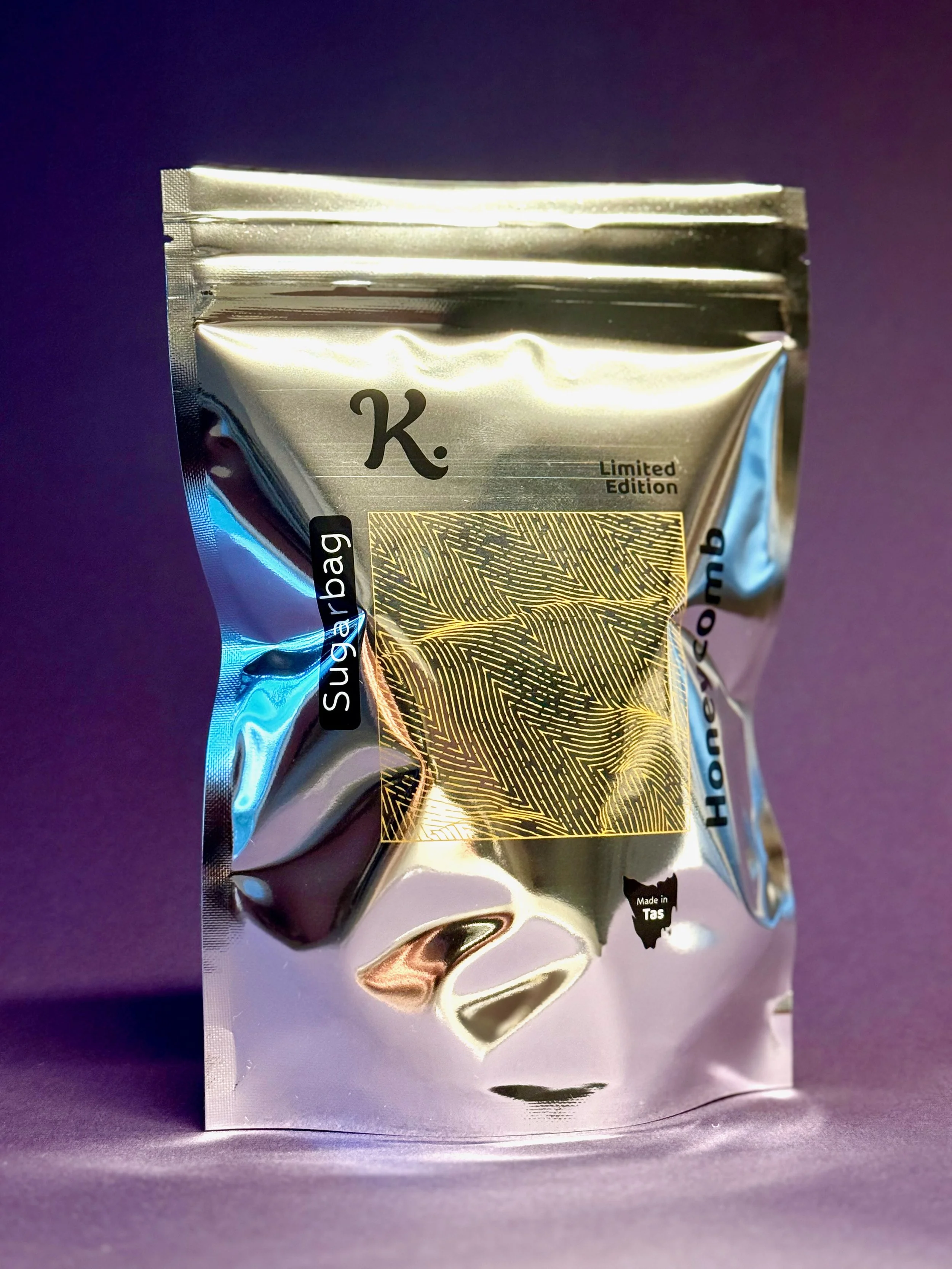 Image 1 of 1